‘Who Owns The Clyde?’ A lecture by Louise Welsh
Celebrating Glasgow’s 850th birthday, our co-founder Louise Welsh was invited by the Medieval Glasgow Trust to deliver the Opening Lecture about The Empire Café’s project ‘Who Owns the Clyde?’, at the St Mungo Festival.
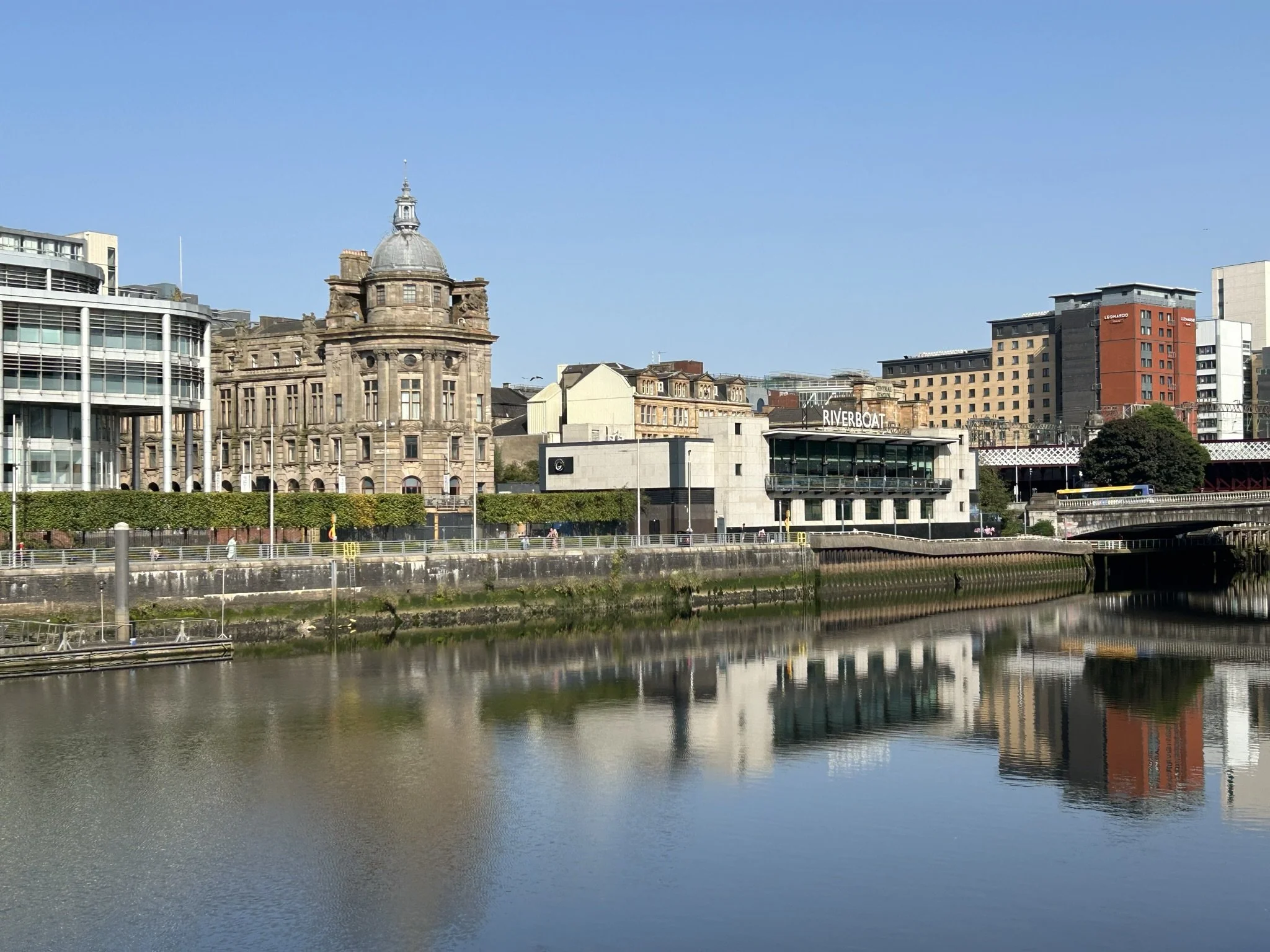
In her 2023 extended essay, ‘Anonymous Objects Inscrutable Photographs and the Unknown’ art historian Kim Beil writes
“There are millions of unknowns in photography, probably an infinite number. Like the expanding universe in reverse these unknowns rush inward, into the depths of the image. No matter how diligently we chase them down with the microscope and blow them up with enlarging lenses we can never get our hands on them.”
A central focus of Glasgow’s celebrations is the River Clyde which is described by Glasgow Life’s 850 website as, ‘The lifeblood of the city and the symbol for community wealth building and climate action for the future.’ It is a statement that I would sincerely love to be true and yet I wonder, if we were to station ourselves outside this building in daylight hours, on the Clyde walkway, and ask passing citizens what the life blood of the city is - where its wealth and climate action is generated - if they would mention the river in their replies.
It is very easy to be a critic, and rather than knock this statement down, I am going to suggest that while I have my doubts that this is currently the case, it was true in our hazy past and it is possible that the Clyde could become again, ‘The lifeblood of the city.’
The Empire Café – A Welcome Conversation
As well as writing novels, libretti and other things, I have a shared creative practice with Jude Barber of Collective Architecture, who I co-direct The Empire Café with.
We founded The Empire Café in 2014 as part of the cultural programme of the Commonwealth Games. We were aware that the games had previously been called The Empire Games and considered that the time was ripe for an exploration into, and an acknowledgement of, Scotland’s connections with the North Atlantic slave trade.
What followed was a week-long series of over forty events, which we hosted along the road in the Briggait, a site intimately connected with Glasgow's mercantile past, where we set up a big two-sided stage, and a working café which Jude re-designed and renovated, a bookshop, a bar, and several pavilions, plus exhibition and workshop spaces.
We commissioned poets from across the Caribbean and across Scotland to write poetry on the theme of Scotland and the North Atlantic Slave trade and published an anthology which we gave away for free. The BBC commissioned five short stories on our theme which were recorded live at the Empire Café. We co-produced a production of Jackie Kay’s Lamplighter at the Tron. We invited historians, writers, filmmakers, land reformers, activists, academics, politicians, journalists, visual artists, actors, musicians, a community choir and others – including our poets, to share the stage in front of public audiences – who were also invited to give their thoughts on the topics under discussion.
Every event was free, and each event collected voluntary donations for Anti-Slavery International.
Afterwards some our visiting Caribbean poets went on residency to Cove Park International Artist’s Centre and then a slimmed down version of the café went to the Edinburgh International Book Festival.
The motto of The Empire Café was, A Welcome Conversation. The tone of openness, conversation rather than lecture or debate was important to Jude and I. Like, Who Owns the Clyde it was not a finger wagging exercise. Rather, it was / is, a sincere expression of enquiry.
Asking the question ‘Who Owns The Clyde?’
We have held various events since then, but our explorations around the Clyde, land ownership and river rights are our first major project for a while.
These explorations have resulted in a three-part podcast entitled, Who Owns the Clyde. And as some of you already know we have hosted a trio of public events.
Who Owns the Clyde was prompted, as all our projects are, by a question. This time it was, why is the river that runs through our city centre, not the vibrant, conduit we might expect to find in a city as lively, creative and engaged as Glasgow.
Why does it not have the variety of leisure and commercial opportunities of the Thames, the Spree in Berlin, the River Lagan in Belfast, Paris’s Seine and countless other rivers, around the globe that run through cities.
Why indeed isn’t it ‘the lifeblood of our city’?
Jude Barber was the person who drew my attention to the many, many visions and strategies for the river Clyde that have been designed over decades. These include the City Plan, Clyde Mission, Clyde Metro, and the Clyde Plan –which brings together eight local authorities. National Planning Framework Four which now identifies the Clyde as a priority not just for Glasgow but for the whole country.
The visions – student projects, suggestions for water taxis, mixed use development, proposals to bringing industry back.
The will is there, the need is there, the vision is there – so what exactly is the problem?
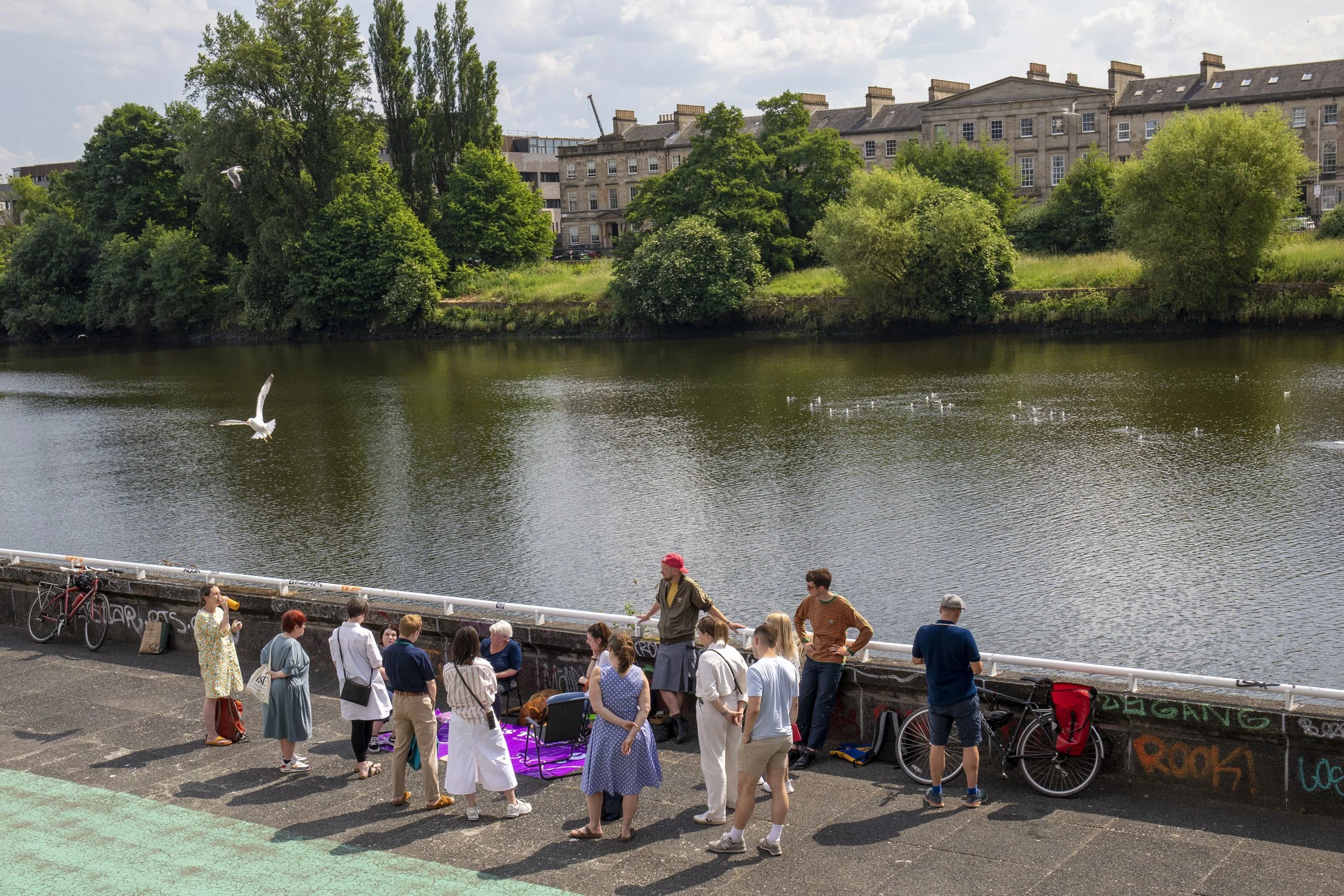
Our past is busy with boats & industry
The river is the reason the first peoples settled in this fertile valley, way, way before St Mungo built his church in the Green Place. Our ancestors were sustained by the river. It watered them, their animals and their crops. They travelled by it.
In 1854 John Buchanan, President of Glasgow Archaeological Society, notes the discovery of ancient canoes that date settlements on the Clyde back to the stone age. He tells us, [1]
“The discovery was made, as in former instances during the extensive operations by the Clyde trustees for widening and improving the river. This new boat counts as the sixteenth found in Glasgow in little more than the last half century.”
The extensive operations by the Clyde Trustees that John Buchanan refers to are heroic feats of engineering that transformed the Clyde.
University of Glasgow’s Map Librarian emeritus, John Moore’s book, The Clyde Mapping the River, published by Birlinn Books, is a wonderful resource of maps of the Clyde which expresses its development, and multiple uses. John kindly pulled out maps from University of Glasgow’s collection for Jude and I to peruse. His work been helpful to my understanding of the development of the Clyde and in the writing of this talk.
John Moore records the importance of the establishment of the harbour at Port Glasgow for the opening up of transatlantic trade with West Indian and American colonies – the triangle that we were concerned with in our 2014 Empire Café incarnation.
As I am sure many of you already know, ships were forced to dock and unload at Port Glasgow’s harbours established in 1762, about twenty miles from the centre of Glasgow because the River Clyde was too shallow for large vessels to navigate into the City of Glasgow.
After multiple surveys, and plans, which encountered repeated setbacks, via a complex process of contracting the channel and dredging, the river’s depth was deepened at the required section allowing crafts of up 70 tons to reach Glasgow.
[1] About a particular canoe. Buchanan, J. (1854). Notice of the discovery of an ancient boat, of singular construction, on the banks of the Clyde. Proceedings of the Society of Antiquaries of Scotland
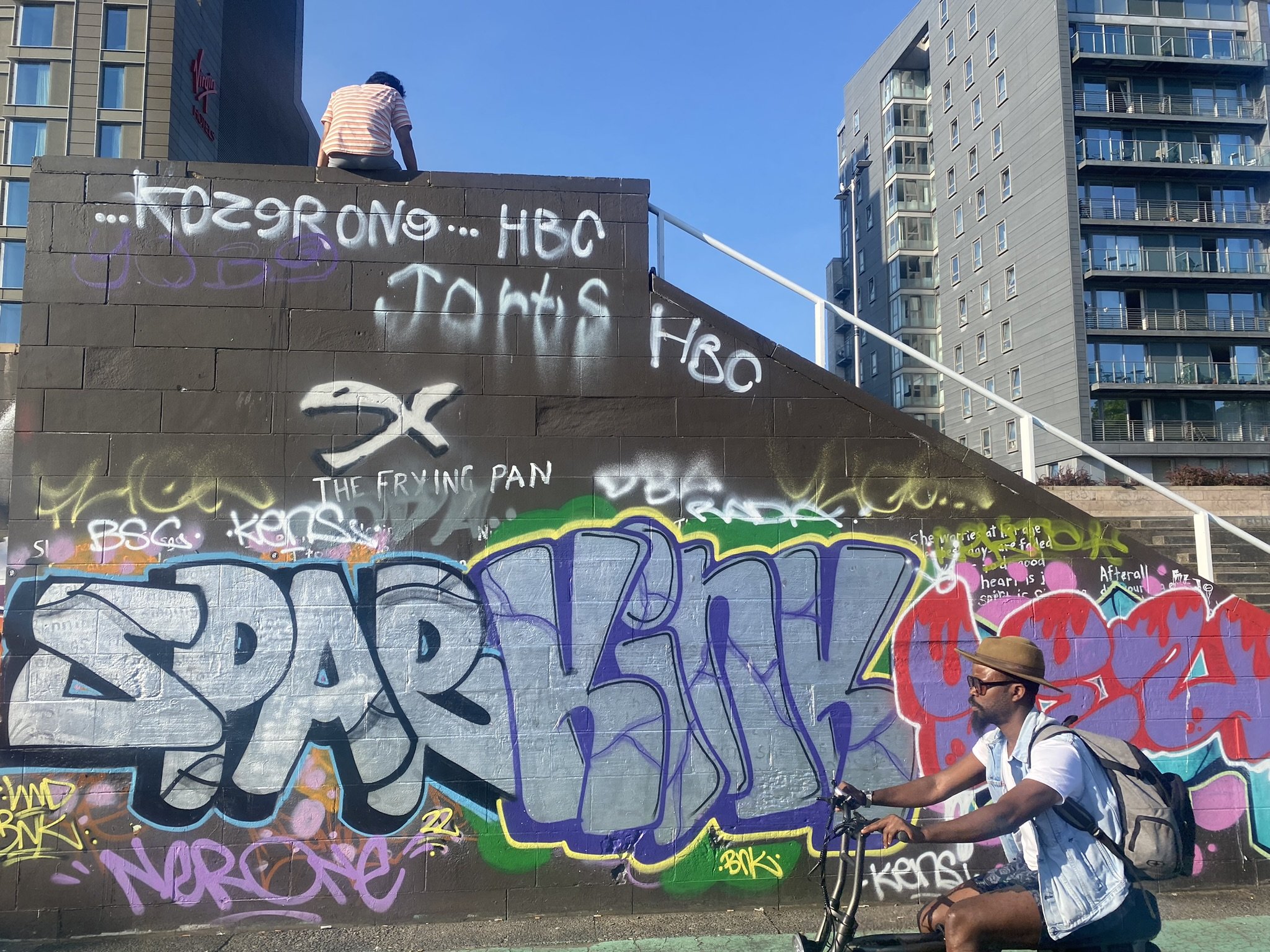
In his novel The Blockade Runners, published in 1865, Jules Verne, who visited Glasgow in 1859 as a young, struggling writer and later in 1879 as an affluent, best-selling author, writes of the Clyde,
“one might almost say that this river had been made by the hand of man, and even by the hand of a master. For sixty years, thanks to the dredges and constant dragging, it has gained fifteen feet in depth.
Jules Verne writes of ‘forests of masts and chimneys… the noise of the foundry hammers and the hatchets of the timber-yards' and describes how after the village of Partick had been passed the factories gave way to country houses and villas’. The Dolphin, the ship at the centre of Jules Verne’s narrative, 'sails between the dykes which carry the river above the shores, and often through a very narrow channel, which, he tells us, ‘Is only a small inconvenience for a navigable river, for, after all, depth is of more importance than width.’”
The hero of the narrative is Captain James Playfair, a Scottish merchant who is setting off on a perilous venture, crossing the Atlantic, breaking the blockade of Southern Shipping by the Northern forces during the American Civil War, outrunning bombardments, in the hope of making his fortune from a consignment of Southern cotton.
Blockade Runners were specially modified Glasgow-built paddle steamers - fast, fuel-efficient ships with shallow but spacious hulls used to transport weaponry and other goods to the south. On the return journey they carried raw cotton and tobacco.
Glasgow shipbuilders soon realised that the profitable second-hand market in paddle steamers could be translated into a lucrative first-hand business. They began taking orders for new vessels with bespoke design changes. New orders meant more jobs on the Clyde.
New jobs are good news, but as we know, they can come at an uncomfortable price. Not everyone was happy with the Blockade Runner business. The dissonance between economic profit and anti-slavery principles divided opinion in the city.
Campaigns against slavery had been active since the 1780s. Glasgow had enthusiastic abolitionist societies with international connections. The 1840s and 50s had witnessed thousands attending abolitionist meetings featuring Harriet Beecher Stowe the author of Uncle Tom’s Cabin and activist Frederick Douglass whose tours crisscrossed Scotland and whose ‘Send Back the Money!’ campaign, condemning the Free Church of Scotland for having accepted donations from Americans involved with slavery, gathered traction across the country.
It disputed how many people died on the battlefields during the American civil war – estimates vary between 620,000 to over 750,000. It is also unclear how long the Blockade Running extended the war, it has been suggested that it could be for as long as two years. We may hesitate to call the enterprise heroic.
The River Clyde is wreathed in nostalgia
This evening there are no boats bobbing by the quaysides on the river a few yards from where we sit. Walkers crossing the new bridge that connects Goven and Finnieston notice gap sites, empty spaces, some that have been left derelict from before the City of Glasgow’s last big birthday, fifty years ago. Who owns them? Who erected signs threatening dire consequences to anyone bold enough to trespass. Are we content with these interruptions to access, that block connections between districts in a city already riven by motorway and expressways?
The River Clyde is wreathed in nostalgia much of which lies in the not-so-distant memory of mass shipbuilding.
An estimated 25,000 – 30,000 naval, merchant and passenger ships have been built on the Clyde and its tributaries since 1711. Around a fifth of all ships launched in the early 1900s were built on the Clyde, and at its height Clyde shipbuilding employed tens of thousands of people – mainly men.
Imagine the community cohesion of witnessing, as many residents of Clydeside did, the ship growing at the end of your street, that rising hull, and knowing that your father, grandfather, uncles, brothers and their workmates were responsible for the creation of this miraculous vessel which would carry the name and reputation of your city across the globe. That you too might also join the shipyards. The shared endeavour of making. The celebration when the ship was at last finished, released down the slip, into the river Clyde - launched on its journey out to wider waters.
This shared endeavour is part of the identity of our city. Celebrated by Muirhead Bone and Stanley Spencer. In her poem Clyde from her 2024 collection Mayday, recent makar Jackie Kay, describes the river as
. . . a place of steel
Rivets and nails
Men swinging their hammers
In violent air,
Fighting the work
Another recent Scottish makar, Kathleen Jamie writes in the voice of the river in her 2021 poem, ‘What the Clyde said, after COP26’
I mind the hammer-swing,
the welders’ flash, the heavy
steel-built hulls I bore downstream
Bill Bryden’s play, The Ship, a flagship production of the 1990 City of Culture celebrations, was held in the Harland and Wolf workshop, where actors built an actual ship, in front of live audiences.
The play celebrated shipbuilding, but it did not shy away from the harsh reality of industrial decline. There was a reason why the production could be located in Harland and Wolf.
Jackie Kay continues,
The river was gunmetal grey
Stretching away under a lead sky
And when the ship slipped into the Clyde
grown men cried
Perhaps these men were crying out of pride, a sense of shared achievement, but perhaps they were also crying because of what might follow, unemployment, the loss of purpose and profession, financial hardship, poverty, shortened horizons.
Precarity was not a new phenomenon.
In Scottish Journey, first published in 1935, Edwin Muir writes how the experience of unemployment robs people of their voices
“… when one goes down the Clyde, to what used to be the busy shipbuilding quarter, there is hardly anything but this silence, which one would take to be the silence of a dead town if it were not for the numberless, empty looking groups of unemployed men standing about the pavements… It was a very hot, bright day when I went down to the shipyards where once in my life I had passed every morning. The weather had been good for several weeks and all the men I passed were tanned and brown… I was on my way to the shipbuilding office where once I had worked for several years. During my time in it there had been twelve clerks. They had now shrunk to six and all six were on half time and half pay. Like the unemployed they were all sunburnt since they spent half their day in enforced leisure.”
Jackie Kay’s reference to the river as gunmetal grey is deliberate. World War Two revitalised shipbuilding on the Clyde and it is notable that the biggest remaining employer and builder of vessels on the river today is BAE Systems who now run the former Yarrow works at Scotstoun and Fairfields at Govan.
BAE are currently sustaining nearly 2,000 jobs in Scotland. They have invested in a 12million pound Shipbuilding Academy. They continue, of course, to supply the military. Work is currently underway on HMS Sheffield the 5th of eight Type 26 frigates.
Not far from BAE Systems, also on the Clyde, Thales Glasgow, originally Barr and Stroud has supplied the Royal Navy since 1917. They currently have a £169million contract to supply periscopes for nuclear submarines, for whom they are also supplying Sonar systems.
It seems that the fortunes of shipbuilding are tied to military endeavour. The end of World War Two saw the decline once again of shipbuilding on the Clyde.
It remains to be seen what current conflicts will do for the future of the industry.
Studies have shown that nostalgia can be good for mental health. Memories remind us of who we were, who we are. Some have the power to connect us to happier pasts and if we are fortunate, they can suggest models for potential futures.
But, as folk stories and legends remind us, though it may be possible to visit the land of the dead, it is dangerous to dwell too long there.
I moved to Glasgow in 1985. It seemed to me then, and still feels that with the decline in industrialisation, our city turned its back on the Clyde.
The post-industrial landscape can be brutal, life blighting. But as industry receded a magical effect took place.
Let’s return to Jackie Kay’s poem, Clyde.
The river holds the grey seals
the carp, the perch, the eels,
the harbour porpoise
the sense of purpose
the dawning of a new day
I remember working as a sales assistant, sometime in the late eighties, early nineties, when an astonished woman told fellow shoppers that she had seen a fish in the river Clyde that morning. A man said, ‘Are you sure it wisnae a dug missus?’
No one would be astonished to hear that fish had been spotted even in the city centre stretch of the Clyde today. Birds abound. I have seen herons and Kingfishers and have spoken to folk who have spotted otters playing on the banks. A security guard at Barclay’s campus told Jude and I that he had witnessed a grey seal swimming in the water while he was doing his rounds.
Future of the Clyde
I have already mentioned the Govan to Partick Bridge, joining communities that could previously see each other, without easily being able to reach the opposite bank – close but far away. Other amazing things are happening on our river. New homes at Water Row in Govan, a community garden colonising a gap site. In the lower section of the Clyde salmon and sea trout, absent for two centuries, now have healthy populations, abundant enough to allow fishing on particular stretches.
And yet, this still feels to me like pockets of sometimes extraordinariness. Earlier in this talk I mentioned the heroic engineering projects facilitated in the 18th and nineteenth century. The dredging and deepening of the river, the blasting of the blockage presented by the Elderslie Rock, which along with other advances, enabled the Clyde to become an important generator of wealth and of leisure – even though, as with the Blockade Runners, we may balk at some of the sources of the wealth.
These projects were led by remarkable and able individuals, but people like James Deas were not lone mavericks. These projects were facilitated by finance, permissions, backing and access.
Glasgow Town Council became trustees of the River Clyde in 1770, with responsibility for managing the river, dredging, and harbour development. The River Improvement Trust was set up in 1809, with ferries being added to its responsibilities in 1840. The River Improvement Trust was succeeded by Clyde Navigation Trust in 1858. The Trust was again responsible for managing the river, ensuring that the shipping channel was properly dredged and maintained, and that harbour, dock and other facilities were developed to keep pace with the demands of trade, local shipbuilding and other industries. Their motto was "Let the Clyde flourish" a variation on Glasgow’s "Let Glasgow flourish". The Clyde Navigation Trust was replaced by the Clyde Port Authority in 1966. It subsequently became Clyde Port. Clyde Port was privatised in 1992 and purchased in 2002 for 184million pounds by Peel Port.
These are facts. A timeline. They tell us what happened but not why. Not who initiated these moves and crucially they do not tell us much about that huge transfer in wealth involved in the act of privatisation.
I began with a quote from Kim Beils’ essay, Anonymous Objects,
“Like the expanding universe in reverse millions of unknowns rush inward, into the depths of the image. No matter how diligently we chase them down with the microscope and blow them up with enlarging lenses we can never get our hands on them.”
I am not an investigative journalist, but should citizens need expert skills to work out why a previously publicly owned asset, including significant portions of the Clyde was transferred into private ownership with the power to inhibit civic plans? Who profited from this transfer and how much did they profit by? According to the Scotsman of 18th November 2002, Clydeport chairman James Millar said
‘Clydeport directors were "unanimously recommending" Clydeport shareholders accept the [Peelports] offer… It represents a significant premium over the current price and, in difficult markets, provides Clydeport shareholders with delivery of certain values as against the risks the delivery of future benefits.’
Of course, private companies’ obligations are primarily towards their shareholders for whom they have promised to create profit. Unlike elected representatives or trustees, private owners have no obligation to report or be accountable to citizens of the city.
A fragmented ownership
Jude Barber and I began our Who Owns the Clyde project in 2023, prompted, as I mentioned at the start of this lecture by a desire to work out why the city stretch of our river, the Clyde, has so many long-term gap sites, forbidden access points, and derelict sections. We decided to map ownership of the city centre stretch of the river – a simple plan, right?
Jude roped in fellow architect and graduate in planning Caitlin Arbuckle MacLeod. She and Jude are used to reading and interpreting maps. It’s part of their daily work. But, as we had already secretly suspected, opacity about land ownership in Scotland made our task a doomed one.
The City Council began a mapping exercise in 2017 and have found similar barriers to working out who owns what in terms of fragmented ownership.
How can we plan for the future when we do not know what we have available to us and when those who own land are not accountable or forthcoming?
We decided to change tack. On a boiling hot day during Architecture Fringe in the summer of 2023, Jude and I hung banners on the railings near the Clyde amphitheatre asking Who Owns the Clyde? We set up deckchairs and asked passersby their opinions.
We asked what they thought of their access to the river.
What their hopes and dreams are for the water.
We asked them who owns the Clyde.
This was of course random and non-scientific. We didn’t ask permissions to set up our stall. We did not ask folk to sign forms. We did not record age, ethnicity, gender, political preferences or any other personal information. We were simply citizens, asking other passing citizens their opinions.
Some people walked on by, but this being Glasgow, many more were keen to let us know what they thought.
Most of them believed that we – the citizens of Glasgow - own the Clyde. Many blamed the council for the condition of the city stretch. They were, on the whole, unhappy with their access. Those familiar with the Barclay’s Campus, a 500,000sq/ft development on the South side of the river at Tradeston, which opened in 2021, generally liked the landscaping though opinion was split on security arrangements around that stretch. Some welcomed the visible presence of security guards, others felt over-policed.
We had discussions about Privately Owned Public Spaces, POPS for short – also known as Pseudo-Public Spaces like Barclays Campus which are open to the public, but are privately owned. These are governed by restrictions drawn up the landowner, which are usually enforced by private security companies.
Some POPS, were previously wholly or partly publicly owned. It is unclear what happens in the future should private owners decide a change of use for these spaces. Is public access an essential condition or can the owners of publicly owned private spaces arbitrarily decide to withdraw access in the future?
People’s hopes and dreams for the river were articulate and reasonable. They talked of boating, water taxis, nice pubs and cafes, being able to cycle, run and walk safely for a longer distance than is possible at present. They spoke about access for wheelchairs and mobility scooters, the need for well-maintained public toilets. And of course, people mentioned ecology, whether the Clyde might generate power. They questioned whether transportation could take place via the river, if they too could sail and row on it, if it might be possible to make a lido, to swim and paddleboard, to hold concerts on the riverside - all things that we see happening in other cities.
Mention was also made of heritage. People wondered how we could commemorate the history of the river including the association with the North Atlantic slave trade. One person asked if the Clyde could become a place of healing.
Some people blamed the City Council for the lack of vibrancy on the river. They were surprised to learn, as we too had been early in our excavations, that the council owns very little if any of the derelict land left.
Jude and I are amateurs, an architect and a writer of crime fiction. We are also citizens. We are aware of our cultural capital. It sits alongside our curiosity as one of our biggest assets.
We took our questions about ownership of the river to people who might have some of the answers and we experienced a huge amount of generosity. Our contributors are too numerous to mention but they included politicians from a range of parties including, Head of Glasgow City Council Susan Aitkin, Councillors Graeme Campbell and Holly Bruce, MSP Paul Sweeney, former MSP Sandra Whyte, Land Reformer Andy Wightman, Map Librarian John Moore, Head of Place for Glasgow City Region Ross Nimmo, Lecturer in Urban and Regional Planning Dr Andrew Hoolachan, Caitlin Arbuckle MacLeod and of course passersby, security guards at Barclays campus and various citizens of the city.
The result is a podcast entitled Who Owns the Clyde which has been streamed over three and half thousand times.
The problems of opaque ownership will be familiar to many of you. A feature by Libby Brooks in The Guardian this weekend focussed on Glasgow’s Built Heritage. She interviewed Niall Murphy, director of Glasgow City Heritage Trust who is keenly aware of problems surrounding opaque ownership and has called for “a culture of building maintenance” across the city including a requirement to carry out five-yearly surveys, as happens in New York and cities around Europe.
Libby Brooks also quotes Ruari Kelly, Glasgow city council’s convener for housing and built heritage, who has described 2025, Glasgow’s 850th anniversary as ‘a year of urgency’.
Jude and I did not predicate our project around Glasgow 850. In 2023 when we started researching Who Owns the Clyde, I was unaware of the anniversary. But I share Councillor Kelly’s sense of urgency.
History reminds us of how fleeting time is. This planet is 4.543 billion years old. It is a blink of an eye since the first peoples settled on the Clyde, a blink of an eye since the City of Glasgow was established. James Deas has only recently blasted the Elderslie Rock, Harriet Beecher Stowe only recently put her foot in it by calling the Duchess of Sutherland a benevolent employer. Frederick Douglass has only just left the City Halls in Candleriggs. The ink has just dried on Jules Vernes’ tribute to transatlantic adventures. And it is not long since the sound of steel on steel stopped ringing across the Govan shipyards, or since the applause of the audience faded in the Harland and Wolf workshop for Bill Bryden’s play. Generations of trustees have met and convened, and discussed and actioned, and Clydeport has only recently been privatised, shareholders, just this moment rewarded for their investment, it is only an instant ago that Peel Holdings wrote their 184million pound cheque and took control.
Only an instant, but time is a funny thing, and it feels like an age since the river was the life blood of our city.
A year of urgency.
Across the globe people are confronted by similar issues regarding fragmented, multiple, opaque ownership and they are taking action.
For centuries the river was governed by trustees. Their focus were fundamentally economic. For centuries the River Clyde has been a place of extraction. Climate Change means that it is necessary to rethink of it as a place which while still having potential to contribute to economic prosperity is also requires nurturing.
Jude and I began our project asking questions about land ownership, but we ended our podcast considering River Rights.
A river is not a person, a river cannot go to court to stand up for itself, but we believe that the river should have rights that are protected, in the same way that we protect the rights of the child, in the same way that we grant companies rights.
Whanganui River, New Zealand was granted the rights of personhood in 2017.
Hundreds of Bangladesh's rivers were legally designated as living people in 2019.
2021, Canada's Magpie River, called the Mutuhekau Shipu by the Innu First Nation, gained legal personhood.
We – you - me - do not own the Clyde, perhaps we don’t need to. But we do have a responsibility to the past and to the future, to protect and nurture the Clyde so that we and fellow citizens, some of whom have not joined us yet, can have a hope of realising our dreams and visions.
Jude Barber and I have launched a petition calling on the Scottish Parliament to urge the Scottish Government to grant the River Clyde, and potentially other rivers in Scotland, the legal right to personhood.
We suggest they do this by:
Adopting the Universal Declaration on the Rights of Rivers
Appointing a Nature Director to act as a guardian of the River Clyde, with the responsibility for upholding its river rights
Considering whether an alternative mechanism should be established to act for the rights of the river, its inhabitants (human and non-human), and society at large.
I do hope you will sign it!