
MERCHANT CITY VOICES
Merchant City Voices is a series of temporary sound installations exploring alternative histories of Glasgow’s Merchant City.
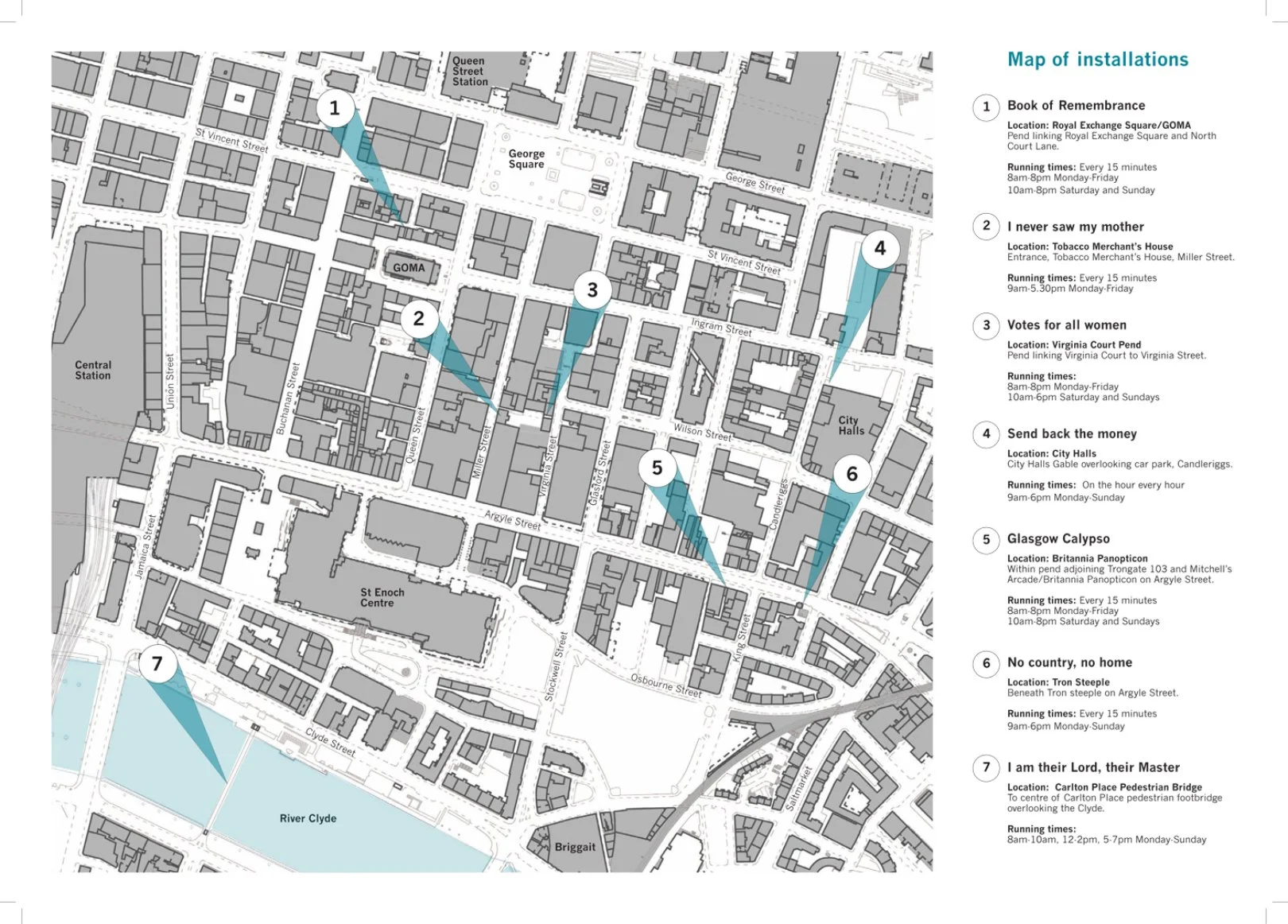
Map of installations
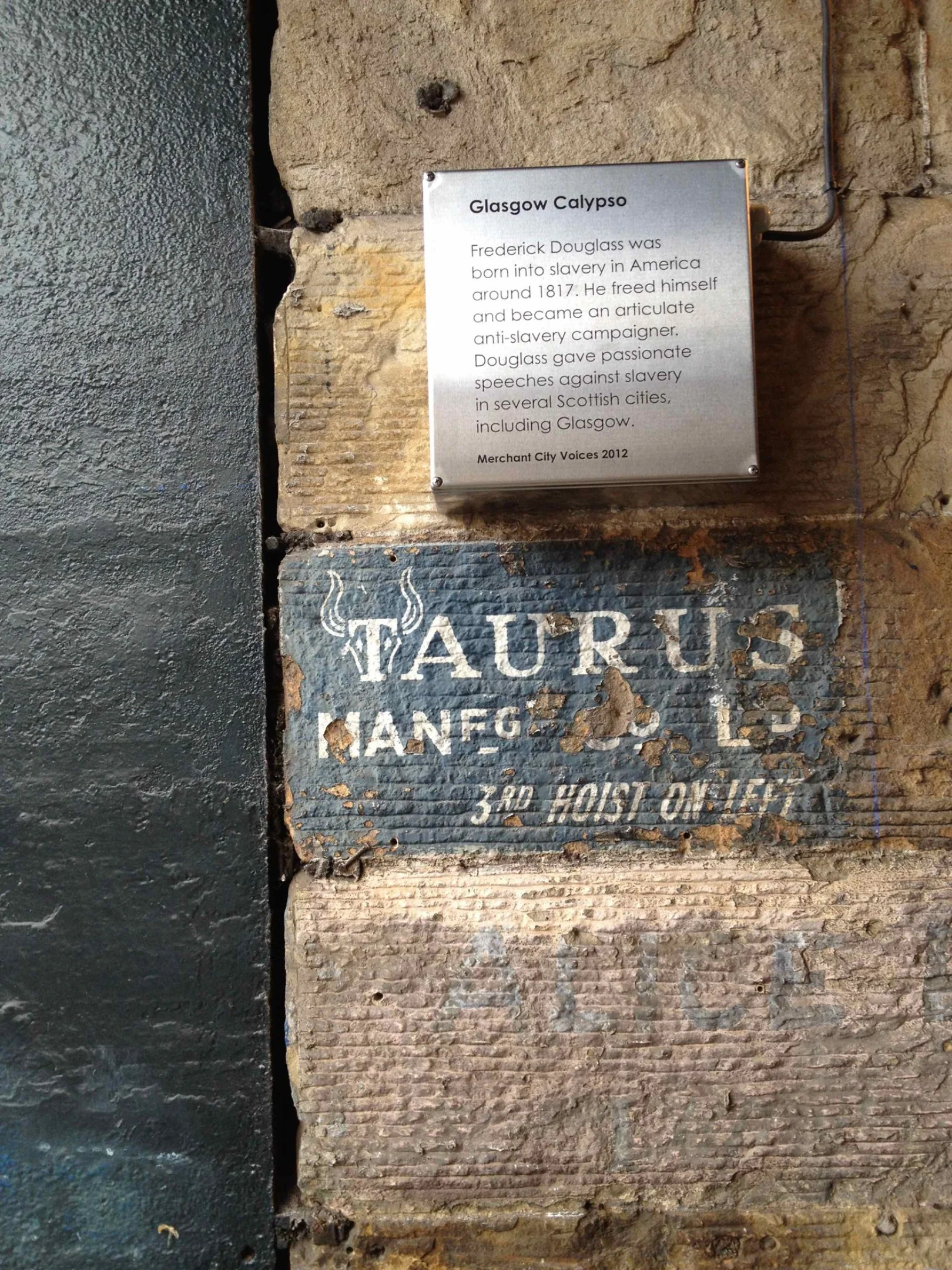
Sound box in lane
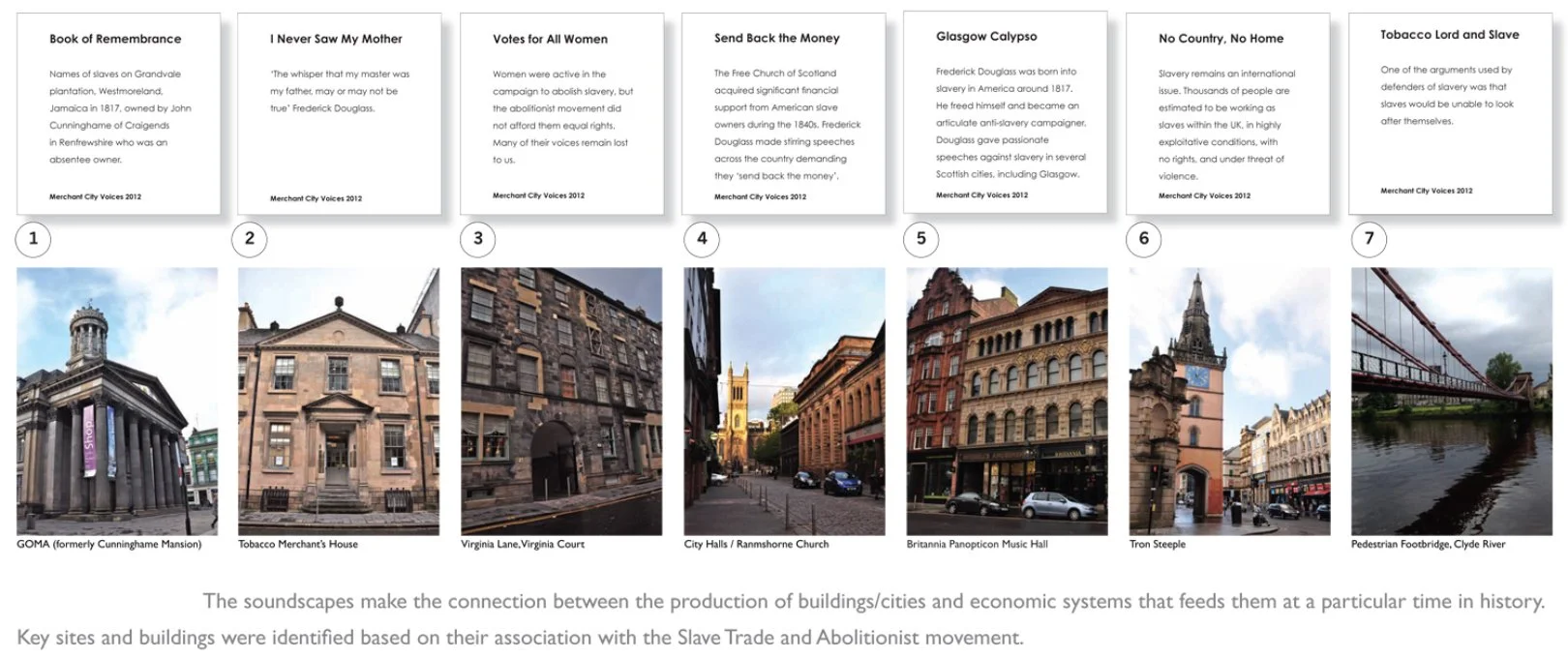
Summary of sound installations and locations
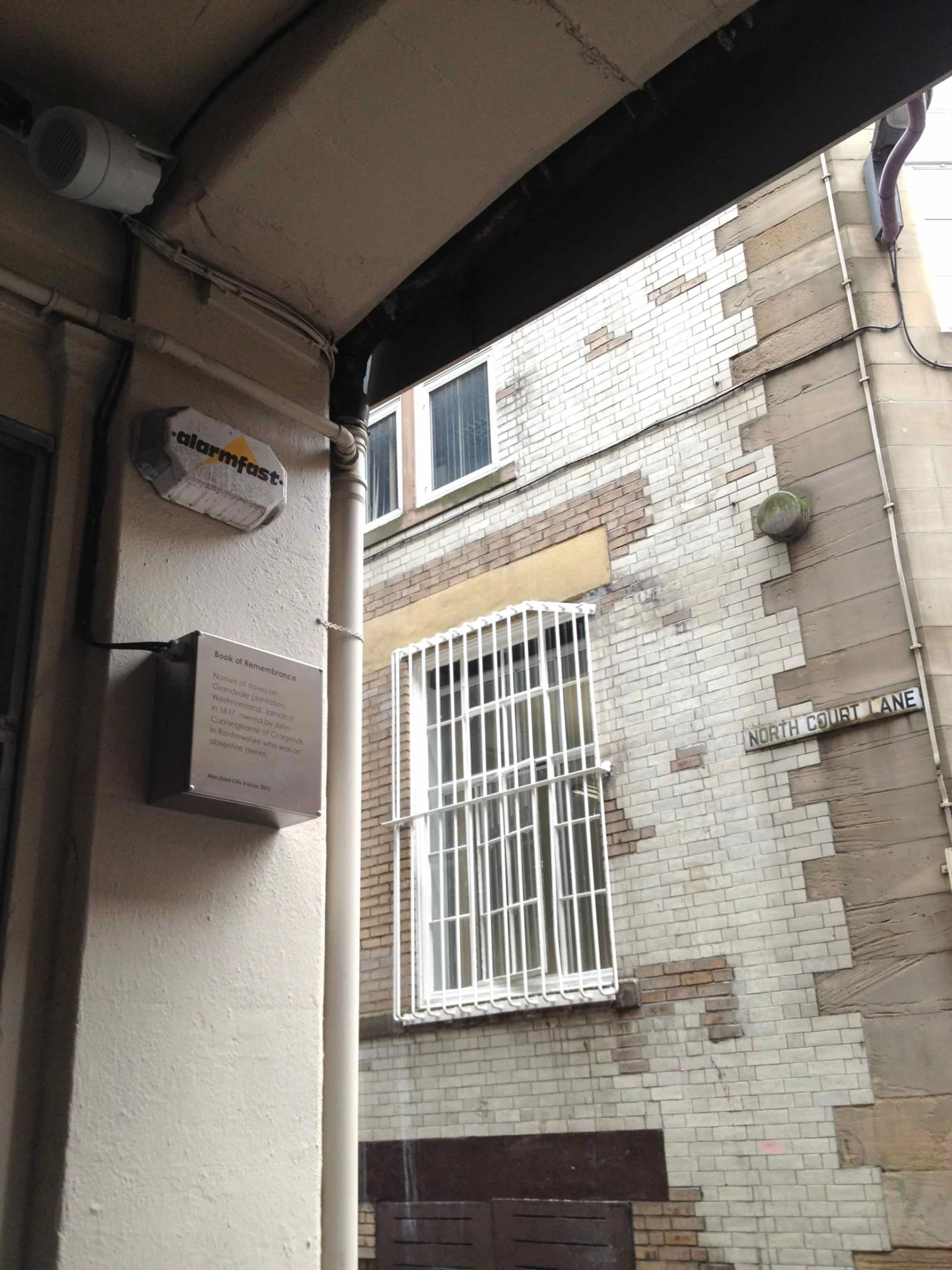
Sound box in lane by GOMA
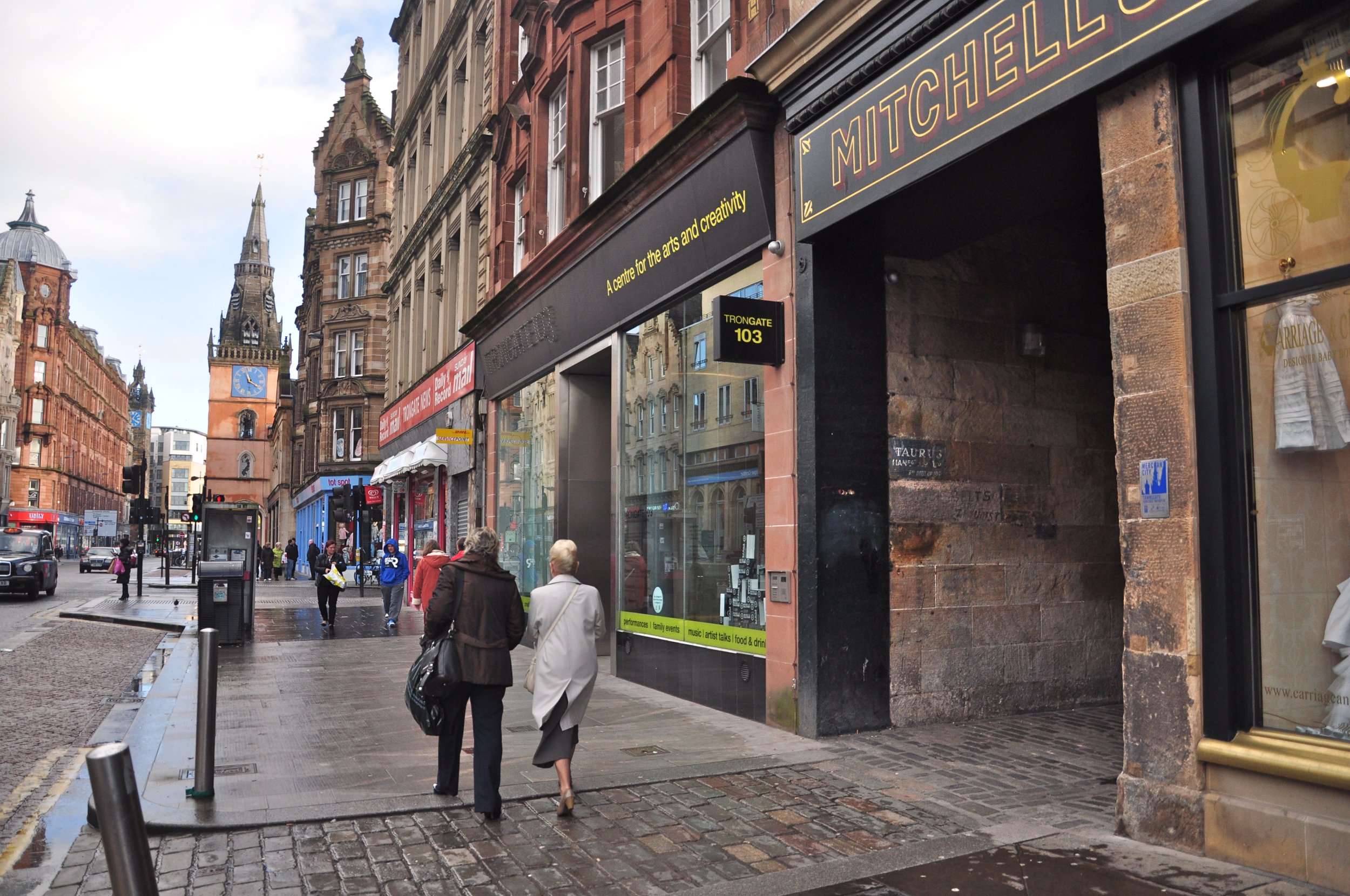
Panopticon lane and Tron Theatre
Our winning entry – between architect Jude Barber and write Louise Welsh - explored Glasgow’s involvement in the tobacco and sugar industries, and the system of forced labour that it depended on - the north Atlantic slave trade and chattel slavery. The project makes the connection between the production of buildings/cities and the economic system that fed it.
Seven sound installations were written, recorded and located within lanes, secondary streets and bridges along a notional journey connecting key buildings between George Square (Merchants’ House) and the Clydeside.
Glasgow’s location on the Clyde and Scotland has shaped its development and led to its global significance as the Second City of the Empire. The project was conceived by Jude and Louise in response to growing discomfort regarding the celebration of some of Glasgow Merchant City’s key buildings, without a wider appreciation of how these buildings were funded and produced.
Key site locations were identified based on their association with the Slave Trade and Abolitionist movement. Each of the buildings and sites where the soundscapes are located were built with wealth generated by forced labour or associated with abolitionism. These include the Gallery of Modern Art (formerly the Cunningham Mansion), Tobacco Merchant’s House, former Virginia Galleries, City Halls, the Tron steeple, the Panopticon Theatre and the Clyde itself on the Calton Terrace footbridge overlooking Jamaica Street.
Louise Welsh wrote the seven pieces which drew on writings by Frederick Douglass - a freed slave – and imagined the viewpoints of the city merchants, slaves and abolitionists. Examples include a roll call of slaves owned by one Glasgow family, a conversation between female abolitionists and the chanting of Frederick Douglass’ call for the Free Church of Scotland to ‘Send back the Money’ gifted by slave owners.
Jude and Louise worked with professional actors, and students from the Royal Conservatoire of Scotland to record the sound pieces during a series of intense and rewarding sessions.
Sound Installations
The sound pieces were installed across seven locations in Glasgow City Centre in August 2012 for the launch of the 2012 Merchant City Festival. These were identified by silver boxes and speakers marked with text at each location. The team also hosted a public debate around the installation and Glasgow’s relationship with Empire in the African Caribbean Centre.
Book of Rememberance
Names of slaves on Grandvale plantation, Westmoreland, Jamaica in 1817, owned by John Cunninghame of Graiend’s in Renfrewshire who was an absentee Owner.
Performed by Daniel Cameron, Cristian Ortega and Jessica Hardwick
I Never Saw My Mother
‘The whisper that my master was my father, may or may not be true’
Votes For All Women
Women were active in the campaign to abolish slavery, but the abolitionist movement did not afford them equal rights. Many of their voices remain lost to us.
Send Back The Money
The Free Church of Scotland acquired significant financial support from American slave owners during the 1840s. Frederick Douglass made stirring speeches across the country demanding they ‘send back the money’.
Glasgow Calypso
Frederick Douglass was born into slavery in America around 1817. He freed himself and became an articulate anti-slavery campaigner. Douglass gave passionate speeches against slavery in several Scottish cities, including Glasgow.
No Country, No Home
Slavery remains an international issue. Thousands of people are estimated to be working as slaves within the UK, in highly exploitative conditions, with no rights, and under threat of violence.
I am their Lord, their Master
One of the arguments used by defenders of slavery was that slaves would be unable to look after themselves.